
Best Web Hosting for Beginners: Why I Recommend Hostinger
Starting a website has never been easier, but choosing the right web hosting can still feel overwhelming. So let’s make a quick online search reveals hundreds of hosting providers, each claiming to be the fastest, most secure, and the best value. For beginners, bloggers, freelancers, small businesses, and even experienced website owners, deciding which hosting company to trust can be confusing.
The truth is that our hosting provider is one of the most important decisions you’ll make. Because it will directly affect our website’s speed, security, search engine rankings, user experience, and even your long-term costs. Choosing the wrong host can lead to slow loading pages, frequent downtime, poor customer support, and expensive migrations later.
This guide is different from many hosting reviews you’ll find online. Instead of simply telling you to buy a hosting plan, I’ll explain how web hosting works, what features actually matter, how to compare providers, and why I recommend Hostinger for most beginners and growing websites.
Whether you’re planning to launch a personal blog, business website, portfolio, online store, or affiliate marketing site, this guide will help you make an informed decision.

By the end of this article, you’ll understand:
- What web hosting is and why it’s essential.
- The different types of hosting available.
- Which hosting features matter most.
- Common mistakes to avoid when buying hosting.
- Why Hostinger stands out from many competitors.
- Which Hostinger plan is best for your needs.
- How to purchase hosting and launch your website.
If you’re looking for a reliable, beginner-friendly hosting provider that offers excellent value for money, keep reading. I’ll explain everything you need to know before making your decision.
What Is Web Hosting?
Every website on the internet needs a place to store its files. Also, those files include your text, images, videos, databases, themes, plugins, and everything visitors see when they open your website. Web hosting is the service that stores these files on a server and makes them available online 24 hours a day.
Think of it this way:
- Your domain name is your website’s address (for example, almostseo.com).
- Your web hosting is the land and building where your website lives.
- Your website is everything inside that building.
Without hosting, our domain name would point to nothing because there would be no website files to display.
Whenever someone types our website address into their browser, the hosting server receives the request and delivers your website to the visitor within seconds.
The quality of our hosting directly affects how quickly this process happens. So, vice versa, faster servers create a better experience for users and can also support your SEO efforts.
Domain Name vs. Web Hosting
Many beginners think a domain name and web hosting are the same thing, but they serve different purposes.
A domain name is the address people use to find your website online. It’s what visitors type into their browser.
Examples include:
- almostseo.com
- example.com
- mybusiness.com
A hosting account stores all of your website’s content and delivers it to visitors whenever they access your domain.
To launch a website, you normally need both:
- A domain name
- A web hosting plan
Many hosting companies, including Hostinger, offer a free domain name with eligible hosting plans, making it easier and more affordable to get started.

How Does Web Hosting Work?
When you publish a website, all of its files are uploaded to a powerful computer called a server. So, unlike a personal computer that may be turned off overnight, servers are designed to operate continuously as your website remains accessible around the clock.
Here’s what happens when someone visits your website:
- A visitor enters your domain name into their browser.
- The browser locates the server where your website is hosted.
- The server processes the request.
- Your website’s files are sent back to the visitor’s device.
- The page loads for the visitor.
This entire process usually takes just a few seconds or even fractions of a second on a well-optimized hosting platform.
Why Good Hosting Matters
Your hosting provider affects far more than simply keeping your website online. It has a direct impact on performance, security, and long-term growth.
Website Speed
Visitors expect pages to load quickly. Slow websites often lead to higher bounce rates, lower engagement, and fewer conversions. Fast hosting provides a solid foundation for a responsive website.
Search Engine Visibility
Search engines aim to deliver a good user experience. While hosting alone won’t guarantee high rankings, reliable performance and faster loading times contribute to a healthier website that is easier to optimize for search.
Website Security
Cyber threats continue to grow every year. A quality hosting provider helps protect your website with features such as SSL certificates, malware scanning, firewalls, backups, and secure server infrastructure.
Reliability
If your hosting server goes offline, your website becomes unavailable to visitors and potential customers. Reliable hosting minimizes downtime and keeps your site accessible.
Scalability
As your website grows, your hosting should be able to grow with it. Whether you’re adding more content, attracting more visitors, or launching an online store, choosing a provider with upgrade options can save you time and effort later.
Who Needs Web Hosting?
If you plan to create any type of website, you’ll need web hosting.

Some common examples include:
- Personal blogs
- Business websites
- Company landing pages
- Portfolio websites
- Freelance websites
- Affiliate marketing websites
- News and magazine websites
- Educational platforms
- Online stores
- Membership websites
- Non-profit organizations
- Local business profile
Whether your goal is to share information, promote a service, or generate income online, reliable hosting is the foundation that keeps your website running.
What Should Beginners Look for in a Hosting Provider?
Not all hosting companies are the same. Instead of focusing only on price, beginners should evaluate the features that provide long-term value.

Some of the most important factors include:
- Fast loading speeds
- High uptime reliability
- Free SSL certificate
- Automatic backups
- Easy WordPress installation
- User-friendly control panel
- Responsive customer support
- Strong security features
- Affordable renewal pricing
- Simple upgrade options
Choosing a provider that balances these features can save you money, reduce technical problems, and make managing your website much easier.
Common Mistakes Beginners Make When Buying Hosting
Many first-time website owners choose hosting based on price alone. Unfortunately, this often leads to frustration later.
Here are some common mistakes to avoid:
- Buying the cheapest plan without checking its limitations.
- Ignoring renewal prices after the introductory offer ends.
- Choosing a provider with poor customer support.
- Forgetting to check whether backups are included.
- Purchasing hosting that doesn’t match the website’s needs.
- Overpaying for advanced features that aren’t necessary.
- Failing to compare hosting providers before making a decision.
A little research before buying can save both money and time in the future.
Types of Web Hosting Explained
Not every website has the same requirements. A personal blog with a few hundred visitors each month doesn’t need the same resources as a large eCommerce store processing thousands of daily orders.
That’s why hosting companies offer different types of hosting plans. Understanding these options will help you avoid paying for features you don’t need or choosing a plan that can’t keep up as your website grows.
Let’s look at the most common types of web hosting and who they’re best suited for.
Shared Hosting
Shared hosting is the most popular and affordable option for beginners. As the name suggests, multiple websites share the resources of a single server, including CPU, memory, and storage.
Think of it like living in an apartment building. So every resident has their own apartment, but everyone shares the same building and utilities
Best For
- Personal blogs
- Small business websites
- Portfolio websites
- New affiliate marketing websites
- Students
- Freelancers
- First-time website owners
Advantages
- Affordable pricing
- Easy to set up
- Beginner-friendly
- No server management required
- One-click WordPress installation
- Ideal for low to moderate traffic
Disadvantages
- Shared server resources
- Limited customization
- Performance may be affected during traffic spikes
For most beginners, shared hosting offers the best balance of price, performance, and simplicity.
WordPress Hosting
WordPress hosting is specifically optimized for websites built with WordPress, the world’s most popular content management system.
Many hosting providers include features such as:
- Automatic WordPress installation
- Automatic updates
- Enhanced security
- Server-level caching
- Performance optimization
- WordPress support
If you’re planning to use WordPress—which powers more than 40% of websites on the internet this type of hosting is often an excellent choice.
Best For
- Bloggers
- Businesses
- SEO websites
- News websites
- Affiliate marketers
- Online portfolios
Cloud Hosting
Cloud hosting stores your website across multiple connected servers instead of relying on a single machine.
If one server experiences an issue, another server can continue serving your website, improving reliability and scalability.
Advantages
- Better uptime
- High performance
- Easy resource upgrades
- Handles traffic spikes well
- Greater reliability
Best For
- Growing businesses
- Busy websites
- Online stores
- Agencies
- Websites expecting increasing traffic
Cloud hosting generally costs more than shared hosting but provides additional performance and flexibility.
VPS Hosting (Virtual Private Server)
A Virtual Private Server (VPS) gives you a dedicated portion of a physical server. While you still share the hardware with other users, your allocated resources are reserved for your website.
This offers more control and better performance than shared hosting.
Advantages
- More dedicated resources
- Improved performance
- Greater customization
- Better scalability
- Enhanced security
Best For
- Medium-sized businesses
- Developers
- High-traffic blogs
- Growing online stores
Things to Consider
Managing a VPS often requires more technical knowledge. If you’re completely new to website management, shared or managed WordPress hosting may be easier.
Dedicated Hosting
With dedicated hosting, you rent an entire physical server exclusively for your website.
No resources are shared with other customers.
Advantages
- Maximum performance
- Complete server control
- Highest level of customization
- Excellent for resource-intensive applications
Best For
- Enterprise businesses
- Large eCommerce platforms
- High traffic media websites
- Custom web applications
Dedicated hosting is powerful but also significantly more expensive than other hosting options.
Managed Hosting
Managed hosting means the hosting provider takes care of many technical tasks on your behalf.
These services may include:
- Server maintenance
- Security updates
- Daily backups
- Performance optimization
- Software updates
- Technical monitoring
Managed hosting is ideal for website owners who prefer focusing on their business instead of server management.

Which Hosting Type Is Best for Beginners?
If you’re launching your first website, you probably don’t need an expensive VPS or dedicated server.
For most users, shared hosting or managed WordPress hosting offers the perfect combination of affordability, simplicity, and performance.
As your website grows, you can always upgrade to more advanced hosting without rebuilding your site from scratch.
This flexibility is one reason why choosing the right hosting provider from the beginning is so important.
What Makes a Great Hosting Provider?
Before comparing specific companies, it’s worth understanding what separates excellent hosting from average hosting.
Performance
Fast loading speeds improve user experience and support your website’s growth.
Look for providers that use modern technologies such as:
- LiteSpeed Web Server
- NVMe SSD storage
- HTTP/3 support
- Built-in caching
- Content Delivery Network (CDN) integration
Uptime
Uptime measures how often your website remains accessible.
An uptime guarantee of 99.9% or higher is considered the industry standard.
Frequent downtime can result in lost visitors, missed sales, and reduced trust.
Security
A reliable hosting provider should include essential security features, such as:
- Free SSL certificates
- Malware protection
- DDoS mitigation
- Firewalls
- Regular backups
- Two factor authentication
- Secure data centers
Ease of Use
A beginner-friendly control panel can save hours of frustration.
Look for features like:
- One click WordPress installation
- Automatic updates
- Easy file management
- Email account setup
- Database management
- Domain management
Customer Support
Technical issues can happen at any time.
Responsive support through live chat, email, or a knowledge base can make resolving problems much easier.
Value for Money
The cheapest hosting plan isn’t always the best value.
Instead, compare what each plan includes:
- Storage
- Bandwidth
- Free domain
- SSL certificate
- Email accounts
- Backups
- Website migration
- AI tools
- Customer support
Sometimes paying a little more provides significantly better features and a smoother experience.

Why I Chose Hostinger as Best Web Hosting
Over the years, many hosting companies have entered the market. Some focus on premium enterprise solutions, while others compete mainly on price.
After researching features, performance, ease of use, pricing, customer feedback, and overall value, I believe Hostinger offers one of the best overall packages for beginners and growing websites.
What stands out isn’t just the low introductory pricing it’s the balance between affordability and features.
Instead of paying extra for essentials like SSL certificates, WordPress installation, website migration, or an intuitive control panel, Hostinger includes many of these tools in its hosting plans.
This makes it easier for beginners to launch a professional website without needing advanced technical skills or purchasing multiple add-ons.
Of course, no hosting provider is perfect, and I’ll also cover some of Hostinger’s limitations later in this guide so you can make an informed decision.
Why I Recommend Hostinger Best Web Hosting
After understanding the different types of web hosting and the features that matter most, the next question is simple:
Which hosting provider should you choose?
There are hundreds of hosting companies available today. Some focus on enterprise businesses, while others target beginners with low introductory prices. The challenge is finding a provider that offers the right balance of affordability, performance, ease of use, security, and long-term value.
After comparing many popular hosting providers, Hostinger consistently stands out as one of the best choices for beginners, bloggers, small businesses, freelancers, affiliate marketers, and growing websites.
It combines modern technology with an easy-to-use interface, competitive pricing, and features that many competitors charge extra for.
More importantly, it allows beginners to launch a professional website without needing advanced technical knowledge.
Let’s look at why.
What Is Hostinger?
Hostinger is an international web hosting company that serves millions of users around the world. Since its launch, it has grown into one of the most recognized hosting providers by focusing on three core principles:
- Affordable pricing
- Reliable performance
- Beginner-friendly tools
Instead of overwhelming new users with complicated server management, Hostinger has designed its platform to make launching and managing websites simple.
Whether you’re creating your first blog or managing multiple business websites, the platform offers solutions that can scale as your needs grow.
Hostinger’s Key Features at a Glance
One reason Hostinger has become so popular is the value included with many of its hosting plans.
Some of the standout features include:
- Fast NVMe SSD storage
- LiteSpeed Web Server technology
- Free SSL certificates
- Free domain name on eligible plans
- Free website migration
- Easy WordPress installation
- Managed WordPress optimization
- AI Website Builder
- AI Content Tools
- Professional email hosting
- Weekly or daily backups (depending on plan)
- Malware scanning
- DDoS protection
- Global data centers
- 24/7 customer support
- 30-day money-back guarantee
Rather than paying separately for several essential services, many users can get everything they need from a single hosting provider.
Beginner-Friendly hPanel
Most hosting companies use cPanel, which is a popular hosting control panel.
Hostinger has developed its own control panel called hPanel.
At first, some users wonder whether using a custom panel is a disadvantage. In practice, many beginners find hPanel easier to navigate because it has been designed with simplicity in mind.
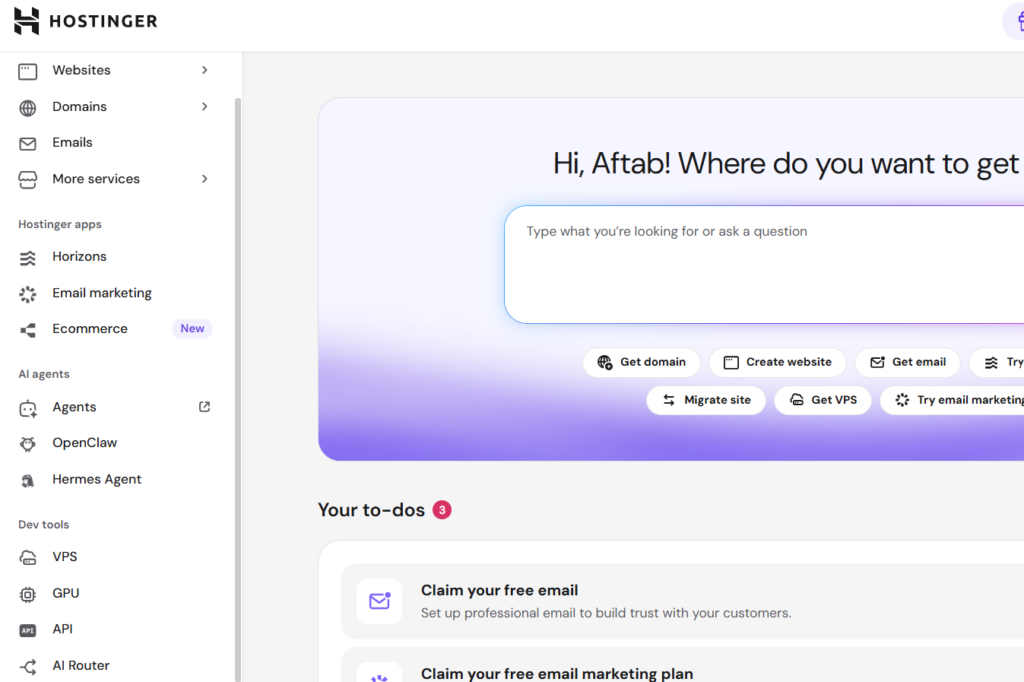
From one dashboard, you can:
- Install WordPress
- Manage domains
- Create email accounts
- Upload files
- Manage databases
- Configure SSL
- Monitor website performance
- Access backups
- Manage security settings
Everything is organized in a clean interface, making everyday website management much less intimidating for first-time users.
Excellent Performance with LiteSpeed Technology
Website speed has become increasingly important for user experience and search engine optimization.
Hostinger uses LiteSpeed Web Server, which is widely recognized for delivering excellent performance compared to many traditional web server configurations.
Combined with NVMe SSD storage, built-in caching, and support for modern technologies, websites can load quickly even on affordable hosting plans.
Benefits include:
- Faster page loading
- Better visitor experience
- Reduced bounce rates
- Improved website responsiveness
- Better support for WordPress optimization
While hosting alone doesn’t guarantee top search rankings, a fast server provides a strong technical foundation.
Free SSL Certificate
Every modern website should use HTTPS. Moreover, Hostinger includes free SSL certificates with its hosting plans, allowing your website to encrypt visitor data securely.
Benefits include:
- Secure connections
- Visitor confidence
- Browser security indicators
- Better compatibility with modern web standards
Installing SSL is straightforward through the hosting dashboard.
Free Domain Name
Purchasing a domain separately can increase the cost of launching a website.
Many eligible Hostinger hosting plans include a free domain registration for the first year.
This helps beginners reduce their startup costs while managing both hosting and domain services from one account.
WordPress Made Easy
If you’re planning to build your website with WordPress, Hostinger includes several features designed specifically for WordPress users.
These include:
- One-click installation
- Automatic updates
- WordPress acceleration
- Built-in caching
- Staging tools (on selected plans)
- Security enhancements
- Easy plugin management
Even if you’ve never built a website before, you can have WordPress installed and running in just a few minutes.

AI Website Builder
Not everyone wants to learn WordPress immediately.
Hostinger also offers an AI Website Builder that can help users create professional-looking websites without coding.
Depending on your needs, AI tools can assist with:
- Website layouts
- Content generation
- Basic branding
- Image suggestions
- Landing page creation
This is particularly useful for freelancers, local businesses, consultants, and entrepreneurs who need to launch a website quickly.
Professional Email Hosting
Using a professional email address creates a stronger impression than free email services.
Instead of using:
you can create addresses like:
Professional email helps build credibility with customers and clients.
Website Security Features
Security is something every website owner should take seriously. But Hostinger includes multiple security features designed to protect websites against common online threats.
These include:
- Free SSL certificates
- DDoS protection
- Secure infrastructure
- Malware monitoring
- Automatic updates
- Firewall protection
- Account security options
No hosting provider can guarantee complete protection against every possible attack, but these built-in features provide a solid starting point for most websites.
Website Backups
Imagine spending months building your website only to lose everything because of a technical problem or accidental mistake.
Regular backups can save countless hours of work.
Depending on your hosting plan, Hostinger provides weekly or daily backups, making it easier to restore your website if needed.
Backups are one of those features you rarely think about—until you need them.
Global Data Centers
Hostinger operates data centers in multiple regions around the world.
Choosing a server location closer to your target audience can improve loading speeds and overall user experience.
This is especially beneficial for businesses serving visitors from specific countries or regions.
Easy Website Migration
Already have a website hosted elsewhere?
Migrating to a new hosting provider often sounds difficult, but Hostinger offers free website migration for many websites.
This can save both time and money while reducing the stress of moving your existing site.
24/7 Customer Support
Even experienced website owners occasionally need help.
Hostinger provides customer support through live chat and an extensive knowledge base.
Whether you’re installing WordPress, troubleshooting an issue, or managing your hosting account, having access to support can make a significant difference.
30-Day Money-Back Guarantee
One feature that gives new customers additional confidence is Hostinger’s 30-day money-back guarantee.
If you decide the service isn’t the right fit within the eligible refund period, you can request a refund according to the company’s terms and conditions.
This reduces the risk for first-time buyers who want to try the platform before making a long-term commitment.
My Thoughts So Far

At this stage, Hostinger checks many of the boxes that matter most to beginners:
- Affordable pricing
- Strong performance
- User-friendly interface
- WordPress optimization
- Modern technology
- Helpful AI tools
- Good security
- Reliable support
- Easy scalability
No hosting provider is perfect, and there are a few limitations that we’ll discuss later in this guide.
However, when considering the overall balance of price, features, and ease of use, Hostinger remains one of the strongest recommendations for users who want to launch a website without unnecessary complexity.
Hostinger Pricing Explained
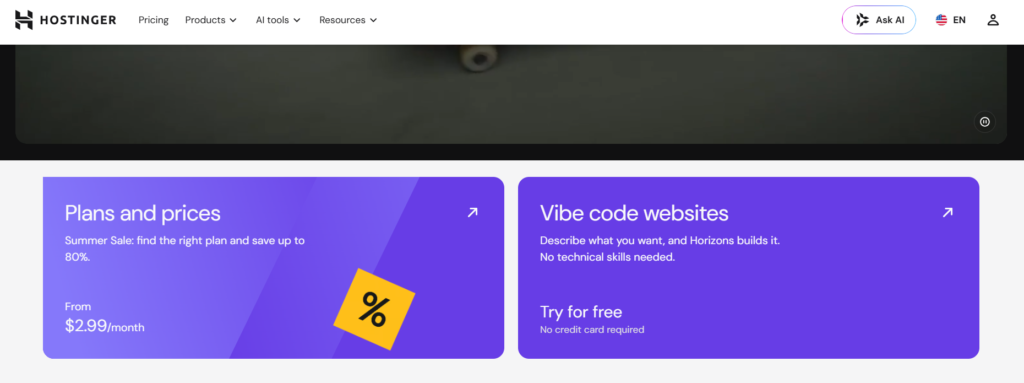
One of the biggest reasons people consider Hostinger is its affordable entry pricing. However, the cheapest plan isn’t always the best choice. Before purchasing, it’s important to understand what each hosting plan offers and which one matches your website goals.
Hostinger regularly updates its plans, pricing, and promotional discounts. Because these offers can change throughout the year, I recommend checking the latest pricing before placing your order.
Tip: If you’re planning to keep your website for several years, longer-term plans often provide better overall value than paying month-to-month.
Which Hostinger Plan Should You Choose?
Choosing the right plan depends on the type of website you’re building and your future growth plans.
Premium Hosting
Best For
- Personal blogs
- Portfolio websites
- Freelancers
- Students
- Small business websites
- First-time website owners
If you’re launching your first website, the Premium plan is often the best starting point. It includes the essential features needed to build a fast, secure, and professional website without paying for resources you may never use.
Business Hosting
Best For
- Growing businesses
- Affiliate marketers
- Content creators
- SEO websites
- Agencies
- Websites expecting higher traffic
Business Hosting is ideal if you’re serious about growing your website. The additional performance, enhanced backup options, and extra resources make it a strong investment for websites that plan to scale.
If someone asked me which plan offers the best balance between cost and performance, this would usually be my recommendation.
Cloud Hosting
Best For
- High-traffic websites
- Large online stores
- Business-critical websites
- Professional agencies
- Websites requiring maximum performance
Cloud Hosting offers additional resources and flexibility, making it suitable for websites that have already grown beyond standard shared hosting.
For most beginners, however, Cloud Hosting is unnecessary during the first stages of building a website.
Which Plan Would I Personally Choose?
If I were starting a new website today, my choice would depend on the project’s goals.
Personal Blog
Premium Hosting
Business Website
Business Hosting
Affiliate Marketing Website
Business Hosting
SEO Agency Website
Business Hosting
Online Store
Business or Cloud Hosting
High-Traffic Website
Cloud Hosting
For most readers of this guide, the Business Hosting plan provides the best long-term value because it offers additional resources that help support website growth.

Hostinger vs Bluehost
Bluehost is one of the best-known hosting providers, particularly because of its long association with WordPress.
However, there are several differences worth considering.
| Feature | Hostinger | Bluehost |
| Beginner Friendly | ✅ Excellent | ✅ Very Good |
| Modern Control Panel | ✅ hPanel | cPanel |
| Free SSL | ✅ | ✅ |
| AI Features | ✅ | Limited |
| Performance Technology | LiteSpeed | Standard Apache/Nginx setup |
| Pricing | Generally lower | Often higher after renewal |
| WordPress Installation | ✅ | ✅ |
My Verdict
Both companies are reputable.
However, if affordability, ease of use, and modern features are your priorities, Hostinger offers stronger overall value for many beginners.
Hostinger vs SiteGround
SiteGround has built an excellent reputation for performance and customer support.
It is often recommended for businesses and experienced WordPress users.
Hostinger Advantages
- Lower entry cost
- Beginner-friendly dashboard
- Excellent value
- AI tools
- Affordable plans
SiteGround Advantages
- Outstanding support
- Advanced developer tools
- Excellent managed WordPress environment
My Verdict
If budget isn’t a concern, SiteGround is an excellent hosting provider.
For beginners looking for the best balance between features and affordability, Hostinger remains my preferred recommendation.
Hostinger vs GoDaddy
GoDaddy is widely known for domain registration, but it also offers web hosting services.
Hostinger Advantages
- Better value
- Modern interface
- Strong WordPress experience
- AI tools
- Competitive pricing
GoDaddy Advantages
- Large product ecosystem
- Popular domain services
- Broad business offerings
My Verdict
For website hosting specifically, I believe Hostinger provides a more beginner-friendly experience.
Hostinger vs Namecheap
Many people know Namecheap for affordable domain names.
Its hosting services are suitable for smaller projects, but there are some important differences.
Hostinger Advantages
- Better hosting-focused ecosystem
- Modern dashboard
- LiteSpeed technology
- AI Website Builder
- Managed WordPress features
Namecheap Advantages
- Affordable domain registration
- Good choice for managing multiple domains
My Verdict
If hosting is your primary concern, Hostinger generally offers a more complete package.
Hostinger vs DreamHost
DreamHost has been in the hosting industry for many years and has earned a solid reputation.
Hostinger Advantages
- Lower starting prices
- Easier interface for beginners
- AI-powered tools
- Global infrastructure
DreamHost Advantages
- Strong privacy features
- Reliable uptime
- Good WordPress support
My Verdict
Both are dependable providers, but Hostinger is often easier for first-time website owners.
Hostinger vs Cloudways
Cloudways focuses on managed cloud hosting.
It is designed for users who require more advanced hosting environments.
Hostinger Advantages
- Easier to use
- Lower cost
- Better for beginners
- Faster setup
Cloudways Advantages
- Advanced cloud infrastructure
- Greater flexibility
- Excellent for developers
My Verdict
Unless you have advanced hosting requirements, Hostinger is the simpler and more cost-effective choice.

Hostinger Pros
After reviewing Hostinger’s platform, these are the advantages that stand out most.
Advantages
- Excellent value for money
- Beginner-friendly interface
- Fast LiteSpeed servers
- NVMe SSD storage
- AI Website Builder
- AI content tools
- WordPress optimization
- Free SSL certificate
- Free domain on eligible plans
- Website migration assistance
- Professional email options
- Global data centers
- Strong security features
- Easy scalability
- 30-day money-back guarantee
Hostinger Cons
No hosting provider is perfect.
Before making your decision, consider these points.
Limitations
- Renewal prices are usually higher than introductory promotional prices.
- Some advanced features depend on the hosting plan you choose.
- Customer support is primarily online rather than phone-based.
- Beginners should compare included features carefully before selecting a plan.
None of these is deal-breakers for most users, but it’s always better to know them before purchasing.
Is Hostinger Worth the Money?
In my opinion, yes.
Hostinger consistently delivers one of the strongest combinations of:
- Performance
- Affordability
- Ease of use
- Security
- WordPress support
- AI tools
- Scalability
While there are hosting providers that excel in individual areas, very few offer such a balanced package at a competitive price.
For beginners, bloggers, freelancers, affiliate marketers, consultants, and small businesses, Hostinger represents excellent overall value.
My Recommendation
If you’re launching your first website or planning to grow an online business, I believe Hostinger is one of the safest choices available today.
It offers enough features for beginners while also providing room to grow as your website attracts more visitors.
Instead of focusing only on the lowest price, think about the long-term value you’ll receive through performance, security, ease of management, and future scalability.
Ready to Launch Your Website?
If you’ve decided that Hostinger is the right fit for your project, you can use my recommended referral link to view the latest plans and current promotions. If you decide to purchase through my link, I may earn a commission at no additional cost to you. Thank you for supporting AlmostSEO.com—it helps me continue creating free, in-depth guides like this one.
How to Buy Hostinger: Step-by-Step Guide
Purchasing web hosting is a straightforward process, even if you’ve never built a website before. The exact layout of the checkout page may change over time, but the overall process remains very similar.
Step 1: Visit Hostinger
Start by visiting Hostinger using the referral link provided on this page. This ensures you’ll see the latest available plans and promotions.
Step 2: Choose the Right Hosting Plan
Select the hosting plan that best matches your needs.
As discussed earlier:
- Premium Hosting – Great for beginners and personal websites.
- Business Hosting – My recommended option for most users.
- Cloud Hosting – Best for larger or high-traffic websites.
Take a moment to compare the included features before continuing.
Step 3: Select Your Billing Period
Hostinger usually offers several billing options.
Longer subscription periods often provide better overall value through discounted introductory pricing.
Before completing your purchase, always review:
- Renewal pricing
- Included features
- Refund policy
- Domain eligibility
Step 4: Register or Connect Your Domain
You’ll now have two options.
Register a New Domain
Choose a new domain name if you’re creating a brand-new website.
Examples:
- mybusiness.com
- myblog.com
- example.net
Choose a name that is:
- Easy to remember
- Easy to spell
- Relevant to your brand
- Short whenever possible
Use an Existing Domain
Already own a domain?
You can connect it to your new hosting account during setup or later through your dashboard.
Step 5: Create Your Account
Enter your email address and create your Hostinger account.
You’ll use this account to manage:
- Hosting
- Domains
- Websites
- Billing
- Security
Step 6: Complete Payment
Choose your preferred payment method and complete the checkout process.
After payment is confirmed, your hosting account will be activated.
How to Install WordPress
One of the biggest advantages of modern hosting is how quickly you can install WordPress.
With Hostinger, installation typically takes only a few minutes.
Step 1
Log in to hPanel.
Step 2
Select your hosting account.
Step 3
Open the Auto Installer or Website Setup section.
Step 4
Choose WordPress.
Step 5
Enter:
- Website name
- Administrator username
- Strong password
- Administrator email address
Use a unique password and store it safely.
Step 6
Click Install.
Hostinger automatically installs WordPress and configures the basic environment.
After installation, you’ll receive your WordPress login details.
Congratulations, your website is now online.
Essential Settings after Installing WordPress
Before publishing your first page or blog post, spend a few minutes configuring the basics.
Update WordPress
Always use the latest version of WordPress to benefit from new features, bug fixes, and security improvements.
Install an SSL Certificate
If HTTPS is not already active, enable your SSL certificate through your hosting dashboard.
A secure website is essential for user trust and modern browsing.
Change the Permalink Structure
Go to:
Settings → Permalinks
Choose Post Name.
This creates cleaner, more SEO-friendly URLs.
Example:
yourwebsite.com/best-web-hosting
instead of
yourwebsite.com/?p=123
Delete Default Content
Remove:
- Sample page
- Hello World post
- Unused themes
- Unnecessary plugins
Keeping your installation clean makes management easier.
Install Essential Plugins
Only install plugins you actually need.
For most new websites, consider:
- SEO plugin
- Caching plugin
- Security plugin
- Backup plugin
- Image optimisation plugin
- Contact form plugin
Avoid installing dozens of plugins, as this can affect performance.
Configure Automatic Backups
Even if your hosting plan includes backups, having an additional backup strategy provides extra peace of mind.
Create Important Pages
Before launching your website, create pages such as:
- Home
- About
- Contact
- Privacy Policy
- Terms & Conditions
- Disclaimer
These pages help improve trust and professionalism.
Website Launch Checklist
Before announcing your new website, review this checklist.

- ✅ Hosting activated
- ✅ Domain connected
- ✅ SSL enabled
- ✅ WordPress installed
- ✅ Theme installed
- ✅ Plugins configured
- ✅ About page created
- ✅ Contact page created
- ✅ Privacy Policy published
- ✅ Mobile responsiveness checked
- ✅ Website speed tested
- ✅ Basic SEO configured
- ✅ Google Search Console connected
- ✅ Analytics installed
Once these tasks are complete, you’re ready to begin publishing content.
Frequently Asked Questions
Yes. Its beginner-friendly interface, simple setup process, and competitive pricing make it a strong choice for first-time website owners.
Yes. WordPress installation is simple, and Hostinger offers features specifically designed to support WordPress websites.
Some hosting plans include a free domain for the first year. Always check the current offer before purchasing.
Yes. Many freelancers, consultants, and small businesses use Hostinger to host their websites.
In many cases, yes. Hostinger offers website migration assistance for eligible websites.
Many plans include professional email options. Review your selected plan for the latest details.
Hostinger includes several security features, including SSL certificates and protective measures designed to improve website security.
Yes. One advantage of Hostinger is that you can upgrade as your website grows.
Yes. It supports WordPress, SEO plugins, caching, and the performance needed for most affiliate websites.
Hostinger provides customer support and a detailed knowledge base to help resolve common questions and technical issues.
This guide has been created to help beginners make informed decisions about web hosting.
Rather than focusing only on promotional claims, the recommendations are based on research into hosting features, pricing, usability, documentation, publicly available information, and the practical needs of website owners.
Hosting plans and features change over time, so I recommend reviewing the latest information on the provider’s official website before making your final decision.
Final Verdict
Choosing the right hosting provider is one of the first and most important decisions you’ll make when building a website.
While there are many reputable hosting companies available today, Hostinger offers an excellent combination of affordability, ease of use, modern technology, and room to grow.
It’s particularly well suited to:
- Beginners
- Bloggers
- Freelancers
- Small businesses
- Consultants
- Portfolio websites
- Affiliate marketers
- Content creators
No hosting provider is perfect, and your ideal choice depends on your goals, budget, and technical requirements.
However, if you’re looking for a reliable hosting solution that provides strong value without unnecessary complexity, Hostinger is a recommendation I feel comfortable making for most new website owners.

Ready to Launch Your Website?
Every successful website starts with a single step.
Whether you’re creating your first blog, launching an online business, building a portfolio, or starting an affiliate marketing website, choosing dependable hosting gives your project the foundation it needs to grow.
If this guide has helped you understand web hosting and you’re ready to get started, you can use my recommended Hostinger referral link to explore the latest plans and current offers.
If you choose to purchase through my referral link, I may earn a commission at no additional cost to you. Your support helps AlmostSEO.com continue publishing free, in-depth guides and tutorials. Thank you!
Conclusion
Finding the best web hosting isn’t about choosing the cheapest plan or the company with the biggest advertising budget. It’s about selecting a provider that offers dependable performance, strong security, helpful support, and the flexibility to grow with your website.
Throughout this guide, we’ve explored how web hosting works, the different hosting options available, the features that matter most, and why Hostinger stands out as one of the strongest choices for beginners and growing websites.
Take your time, compare your options, and choose the plan that best matches your goals. Building a successful website is a journey, and the right hosting provider can make that journey much smoother.
Thank you for reading this guide. I hope it has given you the confidence to take the next step and launch your website.